 Skip to main content
Emerald Gemstone Ring: The Complete Buyer's Guide
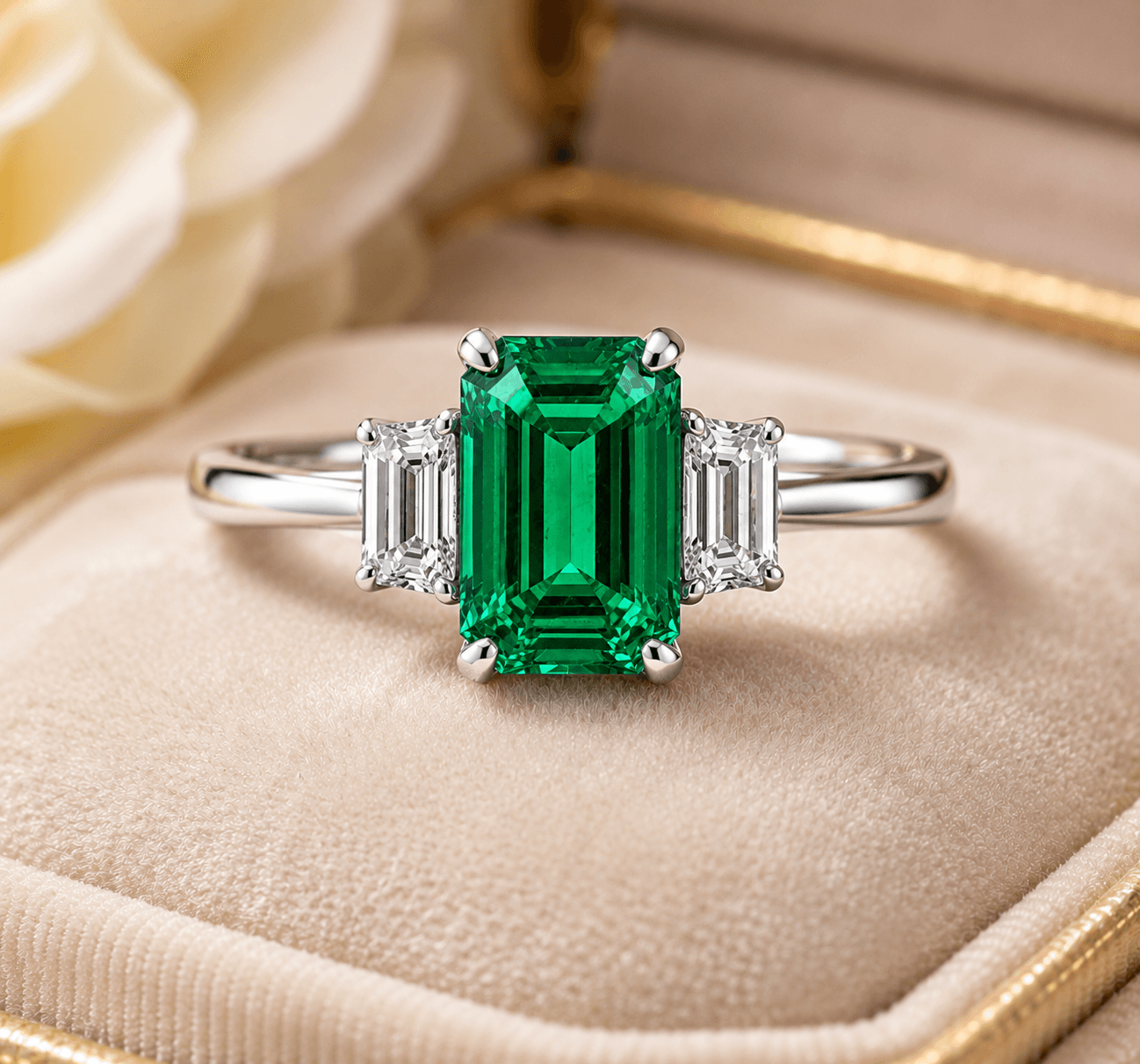
Emerald Gemstone Ring: The Complete Buyer's Guide
An emerald gemstone ring is one of the most striking pieces in fine jewelry — a vivid green stone steeped in 4,000 years of history and symbolism. Before you buy, you need to understand how emeralds are graded, priced, set, and cared for, because the rules are fundamentally different from diamond buying.
Key Takeaways
Emeralds are a variety of the mineral beryl, rated 7.5–8 on the Mohs hardness scale — durable but requiring more care than diamonds or sapphires.
Color is the single most important quality factor. The most valuable shade is a vivid, medium-dark bluish-green with strong saturation.
Nearly 99% of all emeralds undergo oil or resin treatment to improve clarity. Untreated stones are extremely rare and carry a 10–20x price premium.
Prices range from under $100 per carat for commercial-grade stones to over $100,000 per carat for Colombian museum-quality gems.
Yellow gold historically pairs best with emerald's warm green tones; white gold creates a modern, high-contrast look.
What Is an Emerald Gemstone Ring?
An emerald gemstone ring is a fine jewelry piece set with an emerald as its primary stone — a beryl mineral that achieves its distinctive green color from trace amounts of chromium, vanadium, or both. To be classified as an emerald (rather than simply "green beryl"), the stone must display a vivid, green to bluish-green tone at medium-to-dark saturation. Pale green beryl without that intensity is a separate gem category.
Emeralds have been used in rings, crowns, and ceremonial objects by Egyptian, Inca, and Mughal civilizations. Cleopatra famously claimed ownership of Egypt's emerald mines. Today they remain one of the four precious gemstones — alongside diamonds, rubies, and sapphires — and hold a firmly established place in both bridal and fine jewelry markets.
Emerald is the birthstone for May and the traditional gem for 20th and 35th wedding anniversaries.
How to Evaluate Emerald Quality: The 4Cs (With One Key Difference)
Emeralds follow the same four quality pillars as diamonds — color, clarity, cut, and carat — but the weighting is completely different. Color dominates. Clarity standards are more forgiving. Here's exactly what to look for.
Color: The Most Critical Factor
The most valuable emerald color is a vivid, medium-dark bluish-green to pure green with strong saturation. Graders look at three attributes:
Hue:
Pure green to slightly bluish-green is ideal. Yellowish-green stones are less valuable.
Tone:
Medium to medium-dark. Very dark stones appear blackish; very light stones lack the signature emerald intensity.
Saturation:
Vivid and strong. Grayish or brownish modifiers reduce value significantly.
The Gemological Institute of America (GIA) evaluates emerald color using this framework, and dealers who use simplified grading systems typically label top-tier stones as "Heirloom" or "Natural AAAA." According to Diamondere's grading system, AAAA emeralds represent the top 10% of stones — rich green, moderately included, high brilliance, comparable to gems sold at top Fifth Avenue jewelers.
Clarity: Inclusions Are Normal — and Expected
Unlike diamonds, where a loupe-clean stone is the ideal, virtually every natural emerald contains inclusions. The GIA classifies emeralds as Type III gems — stones that grow with characteristic internal features called jardin (French for "garden"), which include mineral crystals, gas, liquids, and healed fractures.
An emerald with no inclusions visible to the naked eye is extraordinarily rare and commands a massive premium. The practical standard: choose a stone whose inclusions do not break the surface and do not significantly impact transparency.
What to avoid: Inclusions that reach the surface of the stone, as these compromise structural integrity and create fracture points.
Treatment: The Detail Most Sellers Skip
Approximately 99% of natural emeralds on the market have been treated with oil or resin — most commonly cedar oil — to fill surface-reaching fractures and improve apparent clarity. This is an accepted, industry-standard practice disclosed by reputable dealers.
What matters for buyers:
Minor oil (F1 treatment grade):
Slight clarity enhancement. Small premium reduction.
Moderate to significant treatment (F2/F3):
Larger clarity improvement. Substantial price impact.
Untreated emeralds:
Extremely rare. According to Gem Breakfast's research, untreated high-quality emeralds cost approximately 10–20 times more than treated counterparts.
Always ask for a GIA, AGL (American Gemological Laboratories), or Gübelin certificate that specifies treatment level.
Cut
Emeralds are commonly cut in the rectangular step-cut style now named for the gem: the emerald cut. This shape showcases color depth and minimizes stress on the stone's natural fracture planes. Oval, round, pear, and cushion cuts are also used, though they require skilled lapidaries to work around internal fractures.
Carat Weight and Price Scaling
Emerald pricing does not scale linearly. A 1-carat emerald does not cost twice a 0.5-carat stone of the same quality — it costs substantially more, because larger gem-quality emeralds are disproportionately rare. According to The Natural Emerald Company, the price roughly doubles with each carat increase at comparable quality. Finding a gem-quality emerald over 1 carat requires, on average, removing approximately five tons of ore.
Price ranges for natural emeralds (2026):
Quality Grade | Price Per Carat |
Commercial (light, heavily included) | $10–$200 |
Good (AA, independent jeweler quality) | $200–$800 |
Fine (AAA, vivid color, moderate inclusions) | $800–$5,000 |
Exceptional (AAAA, Colombian, eye-clean) | $5,000–$100,000+ |
Emerald Ring Settings: Which Works Best?
The setting does two things for an emerald ring: it frames the stone aesthetically and protects a gem that, despite its hardness, carries internal fracture risks.
Prong setting: Maximum light exposure and visual impact. Best for higher-quality stones with no surface-reaching inclusions. A 4-prong or 6-prong setting keeps the stone elevated and brilliant.
Bezel setting: A metal rim encircles the stone's girdle, offering the most physical protection. Ideal for daily-wear emerald engagement rings or stones with minor surface characteristics that benefit from edge protection. The clean profile reads as modern and minimal.
Halo setting: Small diamonds encircle the emerald, amplifying its apparent size and visual brightness. The contrast between white diamonds and vivid green creates a powerful color dynamic. Vintage halo designs pair especially well with antique cushion-cut emeralds.
Pavé/channel setting: Diamonds set into the band add sparkle without competing with the center stone. A popular choice for emerald engagement rings where buyers want diamond brilliance alongside colored stone character.
Three-stone setting: An emerald flanked by two diamonds is a classic configuration. It pairs two of the world's most recognized precious stones and creates a balanced, symmetrical composition.
Choosing the Right Metal for an Emerald Gemstone Ring
Metal choice changes how the green reads — and how the ring ages.
Yellow gold is the historically dominant choice for emerald rings. Its warm tones complement the gem's deep green, creating a rich, classic look with strong vintage appeal. 18K yellow gold is the standard for fine emerald rings — high enough gold content for a warm color while durable enough for daily wear. If you're drawn to Art Deco or heirloom aesthetics, yellow gold is the natural pairing.
White gold creates a high-contrast modern look, making the emerald's green appear more vivid through cool-toned contrast. It suits buyers who prefer a contemporary, refined aesthetic. Note that white gold requires rhodium plating, which needs periodic renewal (typically every 1–2 years).
Platinum offers similar visual effect to white gold with superior durability and a natural silver-white color that won't yellow. It is the most expensive metal option and develops a patina over time rather than scratching away.
Rose gold is the most unconventional pairing — the warm pink tones create an unusual but striking contrast against vivid green. It works best with lighter-toned emeralds and appeals to buyers seeking something visually distinctive.
Skin tone consideration: Yellow and rose gold tend to complement warmer skin tones; white gold and platinum read crisply against cooler skin tones. That said, personal preference supersedes any general rule.
Emerald Origin: Does It Matter?
Yes — and it affects price significantly.
Colombian emeralds (from the Muzo, Chivor, and Coscuez mines) are the world's most prized. They display a warm, slightly bluish-green with a velvet-like depth described in the trade as "Colombian green." Top Colombian stones set records at auction regularly. Prices for certified Colombian-origin gems carry a meaningful premium.
Zambian emeralds are the second most prized origin. They typically show slightly higher iron content, producing a cooler, more bluish-green. Zambian stones often have better clarity than Colombian counterparts at comparable price points, making them excellent value.
Brazilian emeralds are generally lighter in color and more included, placing them in the more accessible price range.
For investment-grade purchases, always secure a certificate from GIA, AGL, or Gübelin confirming geographic origin.
Are Emerald Gemstone Rings Good for Everyday Wear?
Yes — with informed care habits.
Emeralds rate 7.5–8 on the Mohs hardness scale, which means they resist everyday scratching well. The challenge is toughness, not hardness. Because Type III gems grow with characteristic inclusions and internal fracture planes, a hard lateral blow can crack or chip an emerald that a diamond would shrug off.
Practical care rules:
Remove your emerald ring before the gym, gardening, cleaning, or any activity involving impact or harsh chemicals.
Clean with warm water, a drop of mild dish soap, and a soft brush. Never use ultrasonic cleaners — the vibrations can expand existing fractures and strip oil treatments.
Remove before showering; repeated soap exposure degrades the oil filling in treated stones.
Have an experienced jeweler inspect settings annually. Prongs holding emeralds should be checked more frequently than those on diamond rings, as the stone's inclusions create different pressure dynamics.
Store separately from diamonds and other hard gems to prevent contact scratching.
With consistent care, a well-set emerald ring lasts generations. Many antique emerald rings 100 years old remain in excellent condition.
What Does an Emerald Ring Symbolize?
Emeralds carry a rich symbolic vocabulary across cultures and centuries.
Love and devotion:
Emeralds have been associated with Venus, the Roman goddess of love, for millennia. They remain a meaningful choice for engagement rings among buyers who want color alongside commitment.
Rebirth and renewal:
Their vivid green represents spring, growth, and new beginnings — a resonant metaphor for marriage.
Prosperity and good fortune:
In multiple Eastern and Western traditions, emeralds are associated with luck and abundance.
Healing and truth:
Medieval European lore attributed protective and clarifying properties to the stone.
According to The Knot's 2022 Jewelry and Engagement Study, 14% of surveyed brides received colored gemstone engagement rings, with emeralds among the top choices — a meaningful shift in a market historically dominated by diamonds.
Natural vs. Lab-Grown Emerald Rings
Lab-created emeralds share the identical chemical composition (beryl with chromium/vanadium) as natural stones. They display the same vivid green color with fewer inclusions and no treatment requirements.
Key differences:
Price:
Lab-grown emeralds cost a fraction of natural counterparts — often 50-80% less at equivalent visual quality.
Resale value:
Natural emeralds, particularly certified Colombian or Zambian origin, hold and appreciate in value. Lab-grown stones carry minimal secondary market value.
Inclusions:
Lab-grown stones are typically eye-clean, which is uncommon in natural emeralds.
Disclosure:
Reputable sellers always disclose whether a stone is lab-created. Ask directly if it isn't stated.
For buyers prioritizing visual impact and budget, lab-grown is a rational choice. For buyers building a jewelry investment or seeking a piece with long-term provenance value, natural is the standard.
Frequently Asked Questions
How much does an emerald gemstone ring cost?
Emerald gemstone ring prices vary from a few hundred dollars for commercial-quality stones to well over $50,000 for fine natural emeralds in premium settings. A quality natural emerald ring from a reputable jeweler typically starts around $800–$1,500 for smaller stones with AAA color, and scales sharply with carat weight. Because Desert Wholesale Diamond sources directly, wholesale pricing passes those savings to buyers.
Are emerald rings more expensive than diamond rings?
They can be. High-quality natural emeralds with vivid color, minimal inclusions, and Colombian origin regularly exceed the price of diamonds at comparable carat weight. Commercial-grade emeralds cost less than diamonds. The variable is quality — a mid-grade 1-carat emerald and a mid-grade 1-carat round brilliant diamond are roughly comparable in price, but the top of each market differs significantly.
What is the best setting for an emerald engagement ring?
A bezel or low-profile prong setting offers the best protection for daily-wear emerald engagement rings. The bezel encircles the stone's edge, protecting against the lateral impacts that most threaten emerald durability. For occasional wear or statement pieces, a prong or halo setting maximizes visual impact.
How do I know if an emerald is natural or treated?
Reputable sellers provide laboratory certificates from GIA, AGL, or Gübelin that specify whether a stone is natural, its geographic origin, and its treatment status. If no certificate is offered on a stone over $500, ask for one. Treated stones are not inferior — treatment is accepted industry practice — but the degree of treatment affects value and must be disclosed.
Is an emerald ring a good investment?
Fine natural emeralds — AAAA grade, certified Colombian or Zambian origin, with documented minimal treatment — have appreciated consistently alongside other top-tier colored stones. Unlike diamonds, which have a commoditized market, high-quality emeralds are priced on individual merit, and exceptional stones routinely set auction records. As with any gemstone investment, buy the best quality you can afford and prioritize laboratory certification.
Ready to Find Your Emerald Gemstone Ring?
At Desert Wholesale Diamond, we source fine colored gemstones and settings at wholesale pricing — meaning you access the same quality available at retail jewelers at a significantly lower cost. Whether you're looking for a natural Colombian emerald for an engagement ring, a Zambian stone for an anniversary gift, or expert guidance on which grade suits your budget, our team works directly with you.
Contact us or book an appointment to discuss custom settings, stone sourcing, and wholesale pricing options.